Home Remedies for Gout: Ranked by the Evidence
Few home remedies for gout have good evidence. Rest, raising the joint, drinking water and wrapped ice are sensible during an attack, and ice has a small trial behind it. Cherries have observational support for fewer attacks. Most other popular remedies have little or no human evidence, and a few, such as baking soda, can do harm. None of them lowers uric acid enough to replace prescribed treatment.
- Evidence-backed comfort measures during a flare: rest, elevation, wrapped ice and plenty of water, alongside the medicine your clinician prescribed.
- Cherries and cutting sugary drinks and alcohol have the best support for fewer attacks over time, but they are modest effects.
- Apple cider vinegar, baking soda, bromelain, celery seed and essential oils lack trials in gout. Baking soda carries real risks.
- No home remedy dissolves crystal deposits or replaces urate-lowering medicine when it is needed.
- A hot, swollen joint with fever or feeling unwell is an emergency, not a home-remedy problem.
How we ranked these remedies
Most “home remedy” lists are built from forum threads and sales pages. We ranked by a simpler question: has anyone studied it in people with gout, and did the result matter? We read the public guidance from the NHS, the US National Institute of Arthritis and Musculoskeletal and Skin Diseases and MedlinePlus, and compared it with the American College of Rheumatology (ACR) 2020 guideline. We have not tried any of these ourselves, and we do not have a medical reviewer, so treat this as a reading guide to bring to your own clinician, not a treatment plan.
It helps to separate two different jobs. Some remedies ease the pain of a flare that is already happening. Others try to make flares less likely over months. A third group claims to lower uric acid directly. The evidence is strongest for the first, thinner for the second, and weakest for the third.
The ranking at a glance
| Remedy | What it is for | Evidence in gout | Main caution |
|---|---|---|---|
| Rest and elevation | Comfort in a flare | Recommended by the NHS; practical rather than trial-tested | Rest only while the joint is hot; get moving as it settles |
| Wrapped ice | Pain in a flare | One small randomised study, plus NHS advice | Never directly on skin; care with poor circulation or numbness |
| Plenty of water | Prevention, flare support | NHS advice; dehydration is a known trigger | Ask first if you have a fluid restriction |
| Cherries (whole, juice, extract) | Fewer attacks over time | Observational; not a treatment | Sugar in juice; not a substitute for medicine |
| Less alcohol and sugary drinks | Fewer attacks over time | Good observational evidence | Change gradually; crash dieting can trigger flares |
| Coffee | Lower gout risk (association) | Observational only | Not a reason to start drinking it |
| Turmeric, ginger, celery seed, quercetin | Inflammation or urate | Mostly laboratory or very small studies | Interactions, especially with blood thinners |
| Apple cider vinegar | “Alkalising” | No trial in gout | Tooth enamel, throat irritation, some medicines |
| Baking soda | “Alkalising” | No trial in gout | Can cause harm: sodium load and alkalosis |
| Essential oils on the skin | Comfort | No gout trials | Skin reactions; never swallow |
What helps during a flare
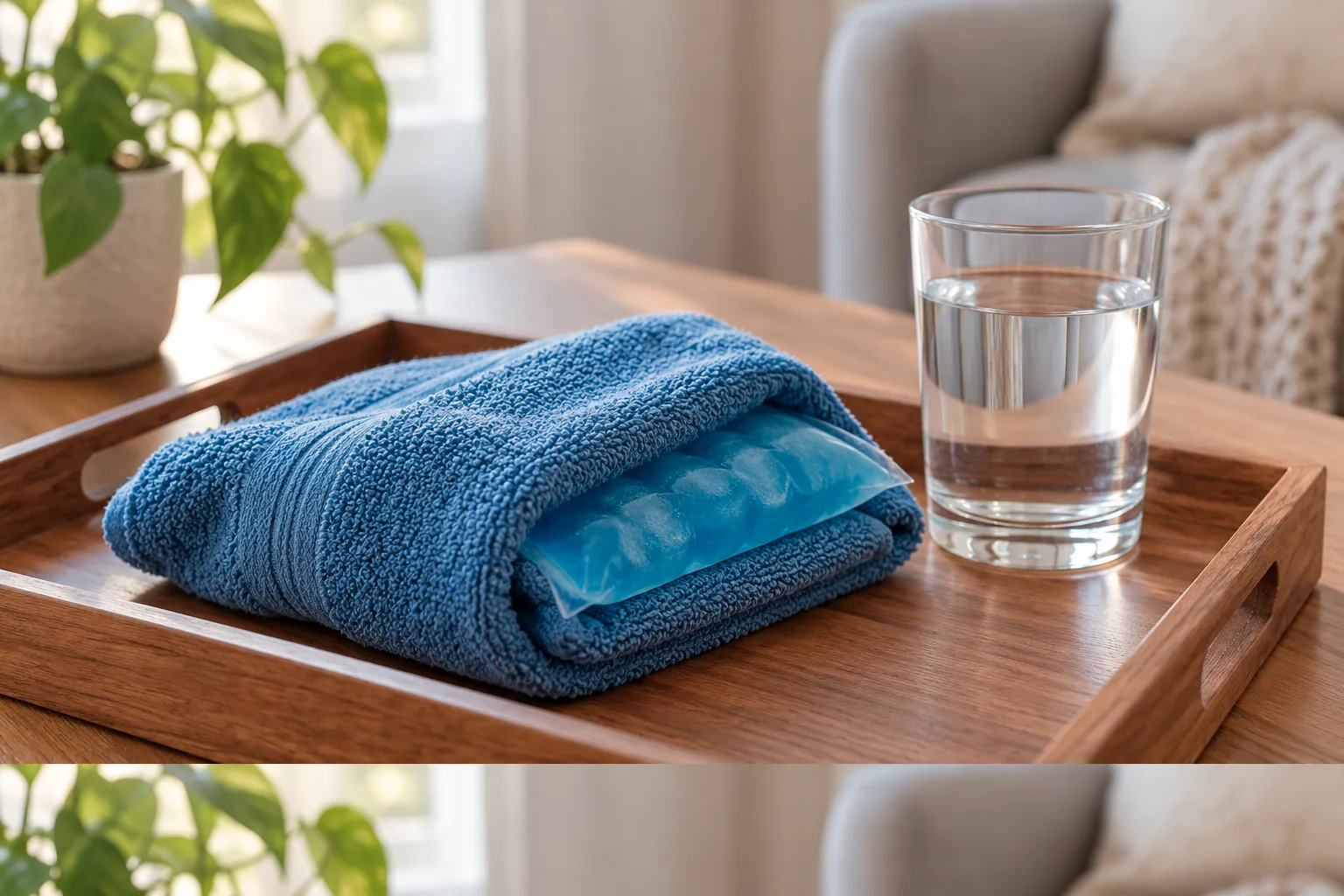
The NHS advice for an attack is plain: take the medicine you have been prescribed as soon as possible, rest and raise the limb, keep the joint cool with an ice pack or frozen peas wrapped in a towel for up to 20 minutes at a time, drink plenty of water unless a doctor has told you otherwise, and keep bedclothes off the joint at night. That list is short because it is honest. These measures make a flare more bearable; the medicine is what shortens it.
Ice
Ice is the one home measure with a trial behind it. In a small randomised study published in 2002, people with an acute attack who added ice to their usual treatment reported more pain relief than those on treatment alone. It was small and has not been repeated at scale, so call it encouraging, not proven. Our guide to ice for gout covers how to do it safely, why heat tends to backfire in a flare, and who should take extra care.
Rest, elevation and keeping pressure off
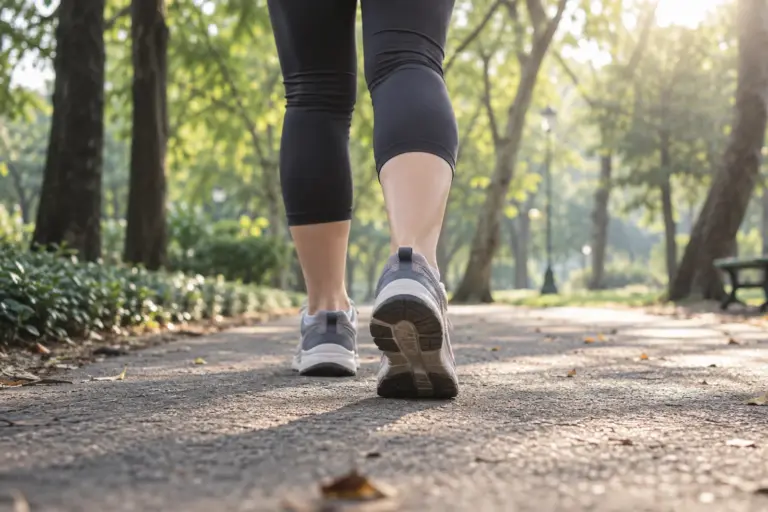
A flare joint is inflamed and tender, and weight or pressure makes it hurt more. Resting it above hip height and keeping the duvet off it is common sense. The rest has a time limit: once the joint cools, gentle movement is better than prolonged immobility. See whether to walk on a gout foot.
Water
Dehydration concentrates urate and is a recognised trigger, so drinking enough is sensible during and between attacks. It will not end a flare. If you have heart or kidney disease or have been told to limit fluid, follow your clinician’s advice instead. Details are in how much water to drink with gout.
What may help over months
These do not treat an attack. They are habits that studies of large groups of people link to fewer attacks.
- Cutting sugary drinks and fructose. Large cohort data link sugar-sweetened soft drinks to higher gout risk. See fructose, soda and gout.
- Less alcohol, especially beer. NHS and NIAMS both advise limiting alcohol. See alcohol and gout.
- Gradual weight loss if you carry extra weight. The NHS cautions against crash dieting, which can raise uric acid temporarily. See weight loss and gout.
- Cherries. A case-crossover study found that people who ate cherries or took cherry extract in the two days before a given day had a lower chance of an attack on that day, compared with their own non-cherry days. It is observational, so it cannot prove cherries caused the difference, and juice carries sugar. Read tart cherry juice for gout: the evidence.
- Coffee. Large studies link regular coffee to lower gout risk, but that is no reason to start. See coffee and gout.
Expect modest effects. Whole-diet change typically moves serum urate by a small amount, and for many people with established gout it will not reach the target of below 6 mg/dL (360 µmol/L) set by the ACR 2020 guideline without medicine. Our guide to lowering uric acid naturally sets out the ceiling honestly.
Remedies with little or no evidence
These are popular. They are not proven, and not proven is different from disproven. The honest summary is that nobody has run a decent trial in people with gout.
- Turmeric and curcumin. Some evidence for inflammation elsewhere, essentially none for uric acid. See turmeric and curcumin for gout.
- Celery seed. A tidy laboratory story, almost no human data. See celery seed for gout.
- Quercetin. One small trial found a modest fall in urate. See quercetin and uric acid.
- Apple cider vinegar. No trial in gout, and the “alkalising” idea does not hold up. See apple cider vinegar for gout.
- Vitamin C. The effect on urate is small. The ACR 2020 guideline conditionally recommends against vitamin C supplements for gout. See vitamin C and uric acid.
A supplement list that looks impressive is not the same as evidence. For a ranked view of products people buy, see best gout supplements: what is worth it.
Remedies that can cause harm
Baking soda (sodium bicarbonate). It is often suggested as a way to “alkalise” the body. It adds a significant sodium load and can push the body towards alkalosis, which matters for anyone with high blood pressure, heart failure or kidney disease. We explain the details in baking soda for gout: why not to. If someone recommends it for a flare, ask a pharmacist or doctor first.
Heat on a flare joint. Heat widens blood vessels and usually makes a hot joint throb more.
Stopping prescribed medicine for a natural approach. This is the largest hidden risk. Uric acid typically returns to its starting level within weeks of stopping a urate-lowering drug, and attacks follow. Read what happens if you stop allopurinol before changing anything, and talk to your prescriber first.
Aspirin and other painkillers chosen at random. Low-dose aspirin can raise uric acid, and NSAIDs are not suitable for everyone. Our NSAIDs for gout page explains who should avoid them.
What paid guides add to this list
Some paid gout guides bundle many of these remedies into one programme. We read the member copy of one of them, The End of Gout, which the publisher gave us free of charge. We have not followed it or tested its results. Its food advice overlaps with mainstream guidance on alcohol, sugary drinks and weight, but it also lists supplements, herbs and a home remedy toolkit that go beyond what trials support. Our full review of The End of Gout goes through what to check with a pharmacist first. The free NHS and NIAMS pages cover the evidence-backed core at no cost.
- I take (list your medicines). Is it safe for me to add this supplement, herb or tea?
- Is my uric acid at target, and if not, what is the plan?
- Which pain relief is safest for me in a flare, given my kidneys, stomach and blood pressure?
- Would a urate-lowering medicine suit me, and what happens if I stop it?
- What fluid amount is right for me?
The NHS advises an urgent GP appointment or a call to NHS 111 (in the UK) for sudden joint pain and swelling with any of these. Elsewhere, contact your local emergency or urgent-care service. Do not wait for a home remedy to work.
- A hot, swollen, painful joint comes with a high temperature, or you feel hot, cold, shivery or generally unwell. This can be a joint infection.
- The pain is getting worse rather than settling.
- You are being sick or cannot eat or drink.
- You have a first-ever attack in a joint you have never had trouble with.
- The skin over the joint is breaking down, or a lump is leaking a chalky material.
Frequently asked questions
What is the fastest home remedy for gout?
There is no home remedy that ends an attack quickly. Prescribed anti-inflammatory medicine started early does the main work. Rest, elevation, water and wrapped ice make the wait more bearable.
Do home remedies for gout in the foot work?
Rest, raising the foot, wrapped ice and fluids can ease discomfort. The big toe and foot are the most common sites, but the same cautions apply: no remedy lowers uric acid enough to replace treatment.
Is apple cider vinegar good for gout?
There is no trial showing that it helps gout. The idea that it alkalises the body is not supported. Vinegar can irritate the throat and wear tooth enamel.
Can I treat gout naturally without medication?
Lifestyle changes help but have a ceiling. Many people with established gout need a urate-lowering drug to reach the target of below 6 mg/dL. Do not stop prescribed medicine without your prescriber.
Are cherries a cure for gout?
No. Observational studies link cherry intake with fewer attacks, which is encouraging, but cherries do not replace treatment and do not dissolve crystals.
Disclosure: the link in this box is an affiliate link. If you buy through it we may earn a commission, at no extra cost to you. The publisher, Blue Heron Health News, gave us a free member copy of the book so we could read it. This is separate from the information above, which does not depend on it.
A single book instead of assembling advice yourself?If you prefer one structured guide over several free pages, we reviewed The End of Gout. Its core food advice matches guidelines, but its supplement list, home remedies and some restrictions go further than the evidence, and we explain who it suits and who should skip it.
Read the publisher’s order page →
Sources
- NHS: Gout
- NIAMS (NIH): Gout
- MedlinePlus: Gout
- NHS: Septic arthritis
- American College of Rheumatology 2020 gout guideline (FitzGerald et al.) (not independently re-read when this page was written)
- Schlesinger et al. 2002, local ice therapy during acute gouty arthritis (PubMed search) (not independently re-read when this page was written)
- Zhang et al. 2012, cherry intake and gout attacks (PubMed search) (not independently re-read when this page was written)
- Choi & Curhan 2008, soft drinks, fructose and gout (BMJ, PubMed search) (not independently re-read when this page was written)
What to read next
- Ice for Gout: Does It Actually Help?
- Fast Gout Pain Relief: What Works
- Gout Attack: What to Do First
- Baking Soda for Gout: Why Not To
- Best Gout Supplements: What’s Worth It