Best Gout Supplements: What’s Worth It
If you would rather change what is on the plate than build a supplement shelf, this is the programme people ask us about most — quick-start food lists and a seven-day structure, meant to sit alongside medical care rather than replace it. Around $49 at the time of writing, 60-day refund.
Two supplements have enough human evidence behind them to be worth a conversation, a couple more are plausible but thinly studied, and the rest of the gout supplement aisle is selling you a mechanism rather than a result. Here is the whole shelf ranked by evidence rather than by how often it is recommended — along with the uncomfortable headline, which is that none of these lowers serum urate anywhere near enough to reach a treatment target on its own.
How this ranking was built
The test is simple: has anyone given this to humans, in a controlled trial, and measured either serum urate or flare frequency? A laboratory finding that a compound inhibits xanthine oxidase in a dish is a reason to run a study, not a reason to buy a bottle. Most of the aisle never gets past the dish.
The second test is scale. Guideline treat-to-target is serum urate below 6 mg/dL (360 µmol/L), and below 5 mg/dL (300 µmol/L) where tophi are present. If you are sitting at 8.5 mg/dL (505 µmol/L), you need to shift roughly 2.5 mg/dL (150 µmol/L). Hold every supplement below against that number and the picture clarifies fast.
Tier 1: modest but real
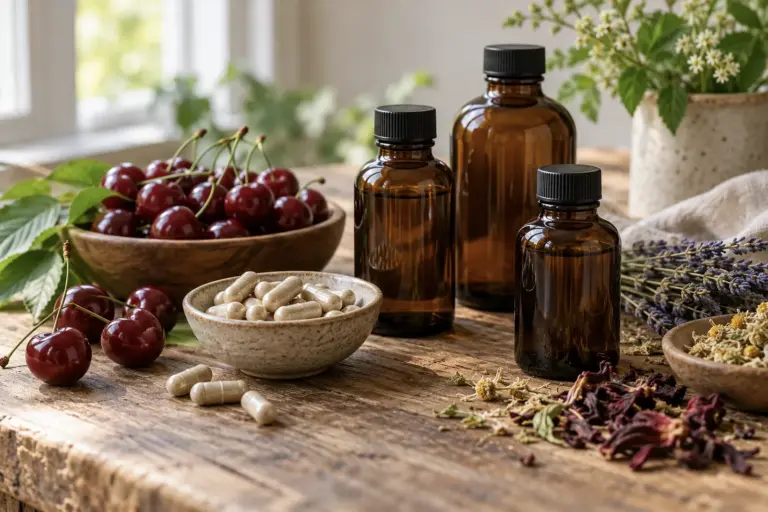
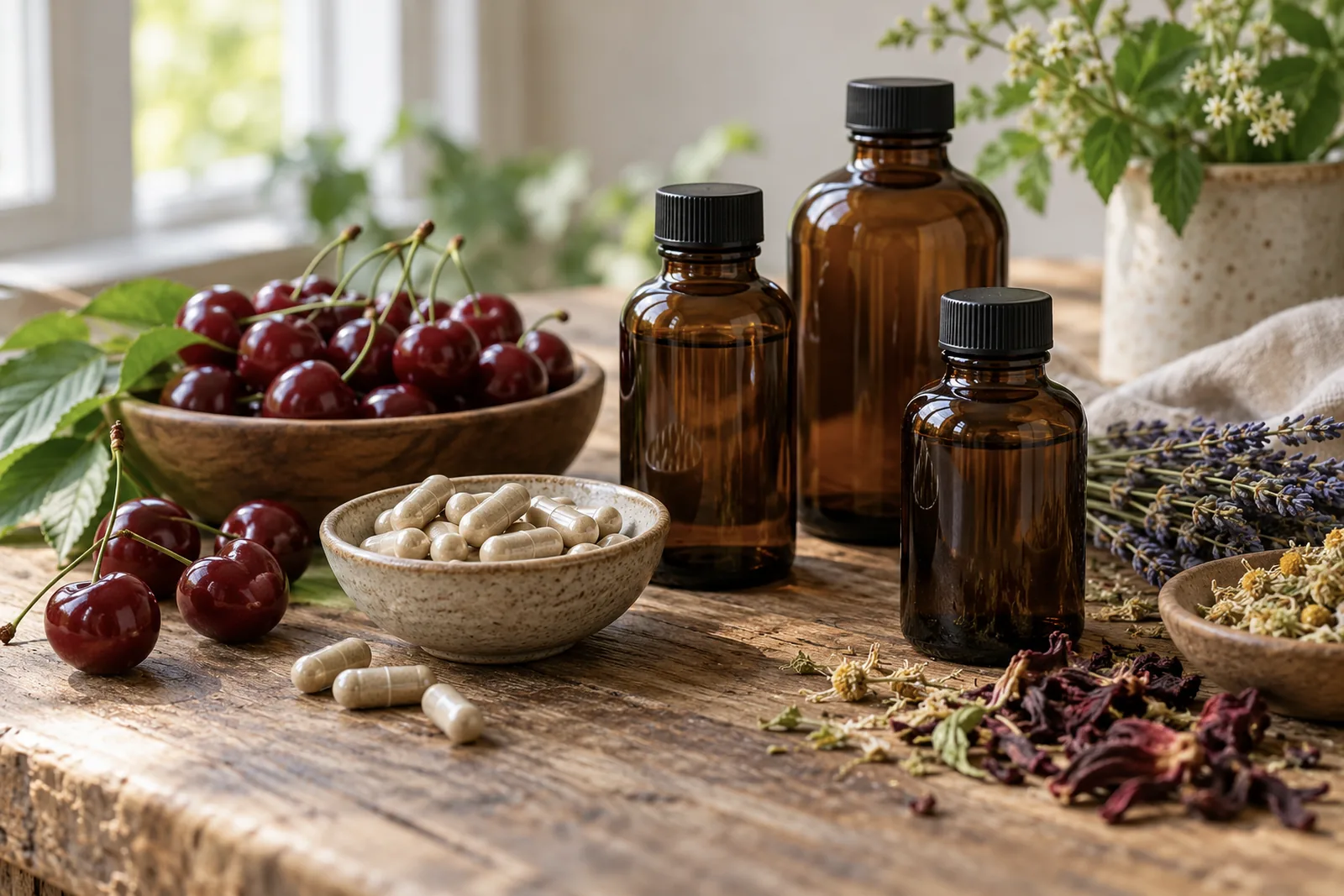
Tart cherry. The best of a thin field. Observational and small interventional work links cherry or cherry extract intake with fewer flares, and there is a plausible anti-inflammatory mechanism from the anthocyanins. The effect on serum urate itself is small. It is safe, it is pleasant, and the main practical trap is drinking sweetened cherry juice by the litre and adding a significant sugar load. Our full look at the cherry evidence has the detail.
Vitamin C. The most consistent urate signal of any supplement — pooled trials show a small reduction, typically a fraction of a mg/dL, at doses around 500 mg daily, probably by nudging renal urate handling. The honest caveat is that a trial in people with established gout did not translate that into meaningfully lower urate or fewer attacks. So: a real effect on the number, too small to rely on. The American College of Rheumatology’s 2020 gout guideline conditionally recommends against vitamin C supplements for gout for this reason, and high amounts are a poor choice if you are prone to kidney stones. We go through the trials here.
Tier 2: plausible, thinly evidenced
Quercetin. Notable because it has an actual randomised human trial behind it, showing a small reduction in serum urate in men with mildly raised levels. Small study, short duration, participants without gout — but that is more than most of this list can claim.
Omega-3. No credible effect on urate at all, and it is honest to say so. What there is instead is observational evidence associating higher omega-3 intake with fewer flares, plus a well-characterised anti-inflammatory mechanism. That makes it a candidate for the inflammation side of gout, never for the cause.
Tier 3: no good evidence for gout
Celery seed rests entirely on test-tube xanthine oxidase inhibition, with no human trials, and it carries real cautions as a diuretic-adjacent herb. Turmeric and curcumin have reasonable anti-inflammatory data in other conditions and essentially nothing for lowering urate. Apple cider vinegar is built on a misunderstanding of how body pH works — we take that one apart separately. Bromelain is an enzyme with some anti-inflammatory evidence elsewhere and none in gout.
The whole shelf, compared
| Supplement | What it claims | What the evidence shows | Who should avoid it |
|---|---|---|---|
| Tart cherry | Fewer flares, lower urate | Small flare signal in observational and small trials; minimal effect on urate | Anyone watching sugar intake — use unsweetened or capsules |
| Vitamin C 500 mg | Lowers uric acid | Consistent but small reduction; no proven effect on flares in established gout | History of kidney stones, haemochromatosis, on high-dose regimens |
| Quercetin | Lowers uric acid | One small randomised trial: modest reduction in men without gout | On ciclosporin, some antibiotics or blood thinners; kidney disease |
| Omega-3 | Fewer, milder flares | No urate effect; observational flare data and a plausible mechanism | On anticoagulants; before surgery |
| Celery seed | Natural xanthine oxidase inhibitor | Laboratory only; no human trials | Pregnancy, kidney disease, on diuretics, lithium or warfarin |
| Turmeric / curcumin | Lowers urate and inflammation | Anti-inflammatory evidence elsewhere; nothing for urate | On anticoagulants, gallstones, iron deficiency |
| Apple cider vinegar | Alkalises the body | No evidence; mechanism is wrong | Reflux, dental enamel erosion, on insulin or diuretics |
| Bromelain | Reduces joint inflammation | Some data in other conditions; none in gout | Pineapple or latex allergy, on anticoagulants or antibiotics |
Interactions worth taking seriously
- Blood thinners run through this whole list — omega-3, bromelain, curcumin and celery seed can all add to their effect. If you take warfarin or a direct oral anticoagulant, clear any of them with your pharmacist.
- Kidney disease changes the calculus for most of these, because roughly two-thirds of daily urate disposal is renal and reduced function is often why urate is high in the first place.
- Kidney stones make high-dose vitamin C a poor choice, since some of it is metabolised to oxalate.
- Quality control is not guaranteed. Supplements are regulated as food, not medicine. Third-party testing marks are worth something; the label alone is not.
If you do take more than one product, keeping a written inventory makes the interaction check above easier. One option is the Evidence-Based Supplement Organizer & Safety Log, a $37 fillable e-book that, per its sales page, includes an inventory, an interaction screen and a one-page summary for your clinician, and says it does not tell you what to take. We have not read it, so this is the vendor’s description, not our review; a notebook and your pharmacist do the same job for free.
Where the money is better spent
Add the whole tier-one shelf together and you are looking at a change measured in tenths of a mg/dL. By comparison, losing weight and cutting alcohol — the two biggest dietary levers — plus dropping fructose-sweetened drinks gets whole-diet change to roughly 0.3–1.3 mg/dL (18–77 µmol/L). Still not enough for established gout on its own, which is the honest reason allopurinol exists and works.
If you want structure for the food side rather than a cupboard of bottles, a programme can be a reasonable purchase — we reviewed The End of Gout and were critical of its marketing while finding the food guidance sensible; that review is here, including who it is not for. And if you have never systematically worked through the free levers, do that first.
Our actual advice: if you want to try something, pick one — vitamin C at 500 mg or unsweetened tart cherry — give it three months alongside your prescribed treatment, and get your urate tested before and after. One change at a time is the only way you will ever know whether it did anything.
Frequently Asked Questions
Can supplements replace allopurinol?
No, and nothing on this list comes close to the reduction a urate-lowering drug produces. Stopping or reducing a prescribed medication is a conversation with the person who prescribed it, never a decision made because a supplement looks promising.
Can I take several of these together?
You can, but then you will not know which one, if any, did something — and the interaction risk stacks, particularly around bleeding. One at a time, with a blood test at each end, is more informative and safer.
Do any of them help during an attack?
No supplement ends a flare in progress. Also worth knowing: a hot, swollen joint with fever can be a joint infection rather than gout, and septic arthritis is an emergency needing same-day assessment. Here is what to do first in an attack.
Is there any supplement that lowers uric acid a lot?
Not one that has been demonstrated in humans. If a product claims a large drop, ask to see the trial — in practice there is not one, and any measured change usually comes from the diet and weight changes people make at the same time.
What to read next
- How to lower uric acid naturally
- The uric acid target that actually matters
- Gout foods to avoid, ranked by impact
- Allopurinol for gout: a practical guide
How we reviewed this (updated 16 October 2026): this page is based on the vendor’s official information, pricing and policies. We have not hands-on tested the products listed, and we have not read their materials unless this page says so.