
Ice for Gout: Does It Actually Help?
Ice for gout is the rare home measure with actual trial evidence behind it. In a small randomised study, people having an acute gout attack who applied ice packs to the affected joint alongside their usual medication reported more pain relief than those given the medication alone. It is cheap, it is safe when done properly, and it is the one thing you can do in the first hour that is likely to make the joint feel better.
What it does not do is end the attack or touch the underlying problem. That split — real pain relief, no effect on the disease — is the whole point.
What the evidence actually shows
The trial most often cited enrolled fewer than two dozen people with acute gout. Everyone received standard treatment; half also applied ice to the inflamed joint several times a day for a week, and that group had a larger drop in pain scores. It is small and has never been repeated at scale, so treat it as encouraging rather than definitive — but it is better evidence than almost anything else in the home-remedy aisle, and the mechanism is not mysterious.
Cold does three useful things to an acutely inflamed joint. It narrows local blood vessels, reducing the flood of fluid and inflammatory cells into the tissue. It slows nerve conduction, which blunts pain signalling. And it drops tissue temperature enough to damp down some of the enzyme activity driving the inflammatory cascade. None of that is specific to gout — it is why cold helps a sprained ankle — but a gouty toe joint is about as inflamed as a joint gets, so there is plenty for cold to work on.
How to ice a gout joint safely
The method matters more than the gadget. A bag of frozen peas moulds around a toe better than a rigid gel pack, and it costs almost nothing. If you would rather keep something dedicated, a flexible reusable gel pack or a foot cold wrap that stays soft when frozen does the same job; the flexibility matters more than the brand.
- Twenty minutes on, at least forty minutes off. Longer is not better and raises the risk of a cold injury to skin that may already be stretched tight and shiny.
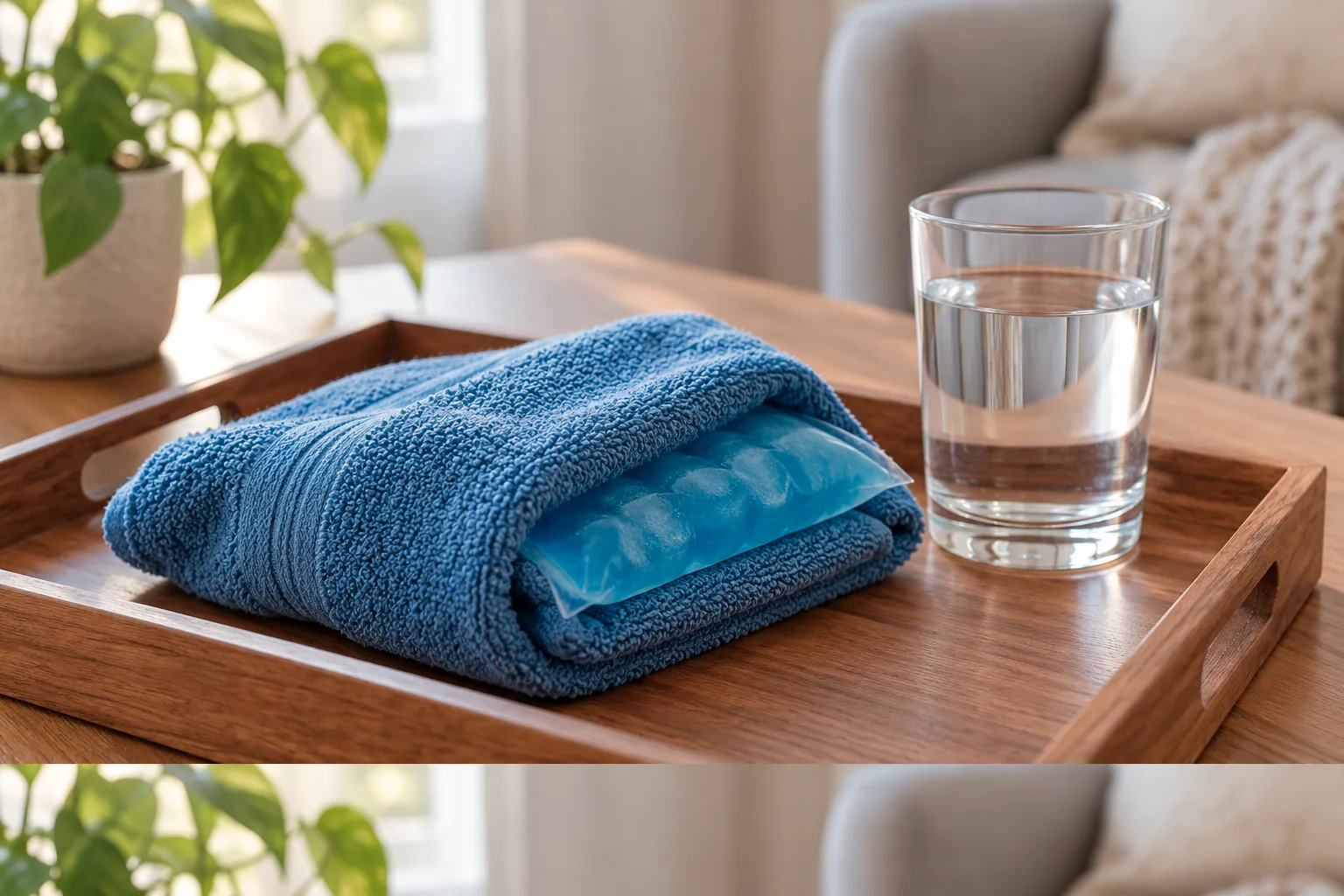
- Always wrap it. A thin tea towel or pillowcase between ice and skin. Never put ice, a gel pack or anything from the freezer directly on bare skin.
- Repeat several times a day for as long as the joint is hot and painful — that is roughly how it was used in the trial.
- Elevate while you ice. Foot above hip height if you can manage it. Gravity is doing you no favours otherwise.
- Check the skin each time you take the pack off. Redness that does not fade, waxy pallor or numbness that persists means stop.
Be more careful if you have diabetes with any degree of neuropathy, peripheral arterial disease or Raynaud’s phenomenon: sensation and circulation in the foot may be poor enough that you will not feel a cold injury developing. Shorten the sessions, inspect the skin closely, or ask your clinician first.
One detail people miss: during a flare the joint is often too tender to tolerate the weight of a duvet, let alone a pressed-on pack. Rest it beside or above the joint rather than pressing down. You are after the temperature, not the pressure.
Why heat is exactly the wrong instinct
Most people reach for heat when a joint hurts, because heat helps the aching, stiff joints of osteoarthritis and it feels comforting. A gout flare is a different animal. It is not stiffness — it is an acute inflammatory reaction to monosodium urate crystals, with the joint already hot, red and engorged. Adding heat widens blood vessels further, increases swelling and, in most people’s experience, makes the throbbing noticeably worse within minutes.
There is a second reason cold suits gout specifically. Urate is less soluble at lower temperatures, which is part of why attacks favour cool peripheral joints like the big toe. That fact occasionally gets turned into an argument that warming the joint would redissolve the crystals. It does not work that way. Crystals already deposited and already triggering an immune response are not going to dissolve over the course of an evening with a hot water bottle — but the extra blood flow will reliably make the pain worse. Cold for a flare, heat for stiff joints between flares, if at all.
What ice will not do
- It does not shorten the attack. An untreated flare runs its own course — see how long a gout attack lasts — and cold does not change that clock.
- It does not lower serum urate. Nothing applied to the outside of a joint moves a blood level that needs to sit below 6 mg/dL (360 µmol/L), or below 5 mg/dL (300 µmol/L) if you have tophi.
- It does not dissolve crystal deposits. Only sustained urate lowering does that, over months.
- It is not a substitute for anti-inflammatory treatment. It is an add-on, exactly as it was tested.
Where ice sits in the actual plan
The sequence that works during a flare is: start your anti-inflammatory treatment as early as you can, rest and elevate the joint, and ice it for symptom relief while the drug takes effect. Our guide to what to do first in a gout attack covers the order in detail, and fast gout pain relief compares the options that actually shorten a flare. Ice fills the gap between taking something and feeling it work, which in practice is several hours.
It is also worth noticing what the flare is telling you. Repeated attacks mean urate is still above the point where it crystallises, however carefully you are eating. Cold packs sit at the end of a chain that starts much earlier — with the triggers and, more importantly, with the blood number itself.
Keep one in the freezer now: the time to find out your ice pack is buried behind a bag of ice cubes is not 3am with a screaming toe. Put a bag of frozen peas and a clean tea towel somewhere you can reach them half-asleep, and label the peas so nobody cooks them.
When a hot joint is not gout
A joint that is hot, swollen and exquisitely painful can be septic arthritis — a joint infection — and that is a medical emergency, not something to ice and wait out. Fever, feeling systemically unwell, rapidly worsening pain, or a first-ever attack in a joint you have never had trouble with all warrant urgent assessment the same day. Infection destroys cartilage quickly and needs joint aspiration and antibiotics. If there is any doubt at all, be assessed rather than assume it is gout because you have had gout before; the two can also occur in the same joint.
Frequently Asked Questions
Can I ice a gout flare overnight while I sleep?
No. Unattended icing is how cold injuries happen, because you cannot monitor the skin or feel warning numbness while asleep. Ice for twenty minutes before bed, then elevate the foot on a pillow and let it be.
Should I alternate hot and cold during an attack?
Not during an acute flare. Contrast therapy is used for other conditions, but the heat phase tends to aggravate gout pain and there is no evidence it helps here. Stay with cold until the joint is no longer hot to the touch.
Does icing interfere with my gout medication?
No. Cold works locally on the joint and has no interaction with colchicine, anti-inflammatories, steroids or urate-lowering therapy. Keep taking whatever has been prescribed exactly as directed, and speak to your prescriber rather than adjusting anything yourself.
My joint feels better after icing — can I walk on it?
Numbed is not healed. The joint is still inflamed and weight-bearing during the acute phase tends to prolong the pain. Use the relief to rest more comfortably, not to get more done.
What to read next
- Gout Attack: What to Do First
- Fast Gout Pain Relief: What Works
- How Long Does a Gout Attack Last?
- Why Gout Hits the Big Toe First
- Home Remedies for Gout: Ranked by the Evidence