
Gout in Women: What Changes After 50
Gout in women is largely post-menopausal: why oestrogen protected you, how it presents in the hands, and why it is so often diagnosed late.
What gout is, how it starts, where it strikes and how it is diagnosed — explained without the jargon.
Gout in women is largely post-menopausal: why oestrogen protected you, how it presents in the hands, and why it is so often diagnosed late.

Can gout be cured? Usually controlled, not cured: low uric acid brings remission. What remission means, what diet can do, why stopping backfires.
Gout or joint infection? They look identical, and a septic joint is an emergency. The red flags, why aspiration is the only reliable answer.
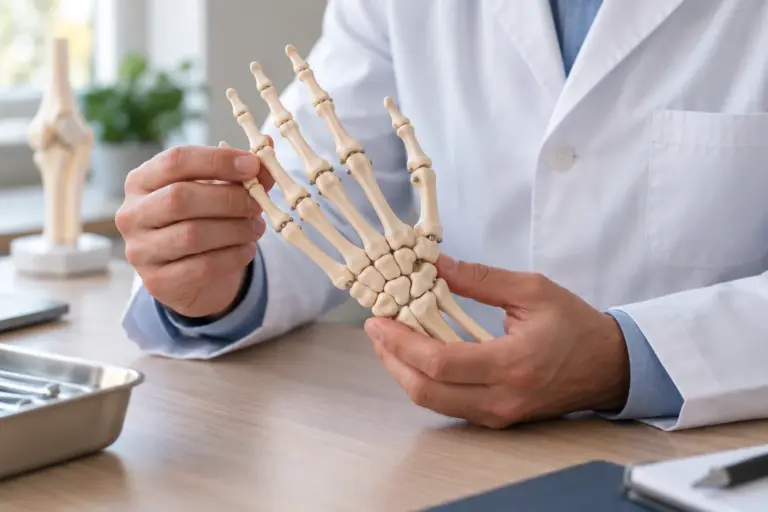
Gout in the hands and fingers is often mistaken for arthritis. How the pattern differs from RA and OA, who gets it, and what it does to daily life.
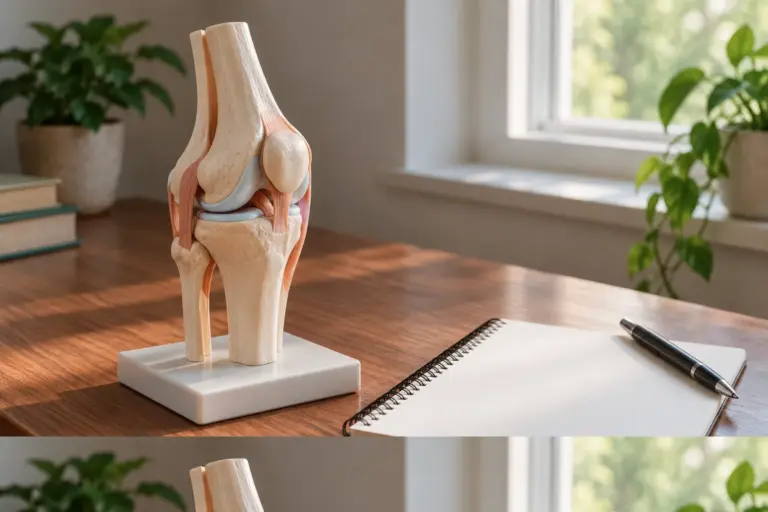
Gout in the knee is often mistaken for arthritis or an injury. The signs that separate it, why aspiration is easy here, and the infection red flags.
Tophi are lumps of solid urate under the skin. What they are, where they appear, and how they dissolve when uric acid stays below 5 mg/dL.
Gout vs pseudogout: different crystals, different joints and a different long-term plan. How doctors tell them apart, and why aspiration settles it.

Untreated gout over a decade: bone erosions, tophi, deformity, urate stones — and an honest look at the kidney and heart associations.
The four stages of gout, from silent high urate to tophi — and why the quiet stage between attacks is the one that decides everything.
How gout is diagnosed: why joint aspiration settles it, what ultrasound and DECT add, and why a urate test during an attack can mislead.