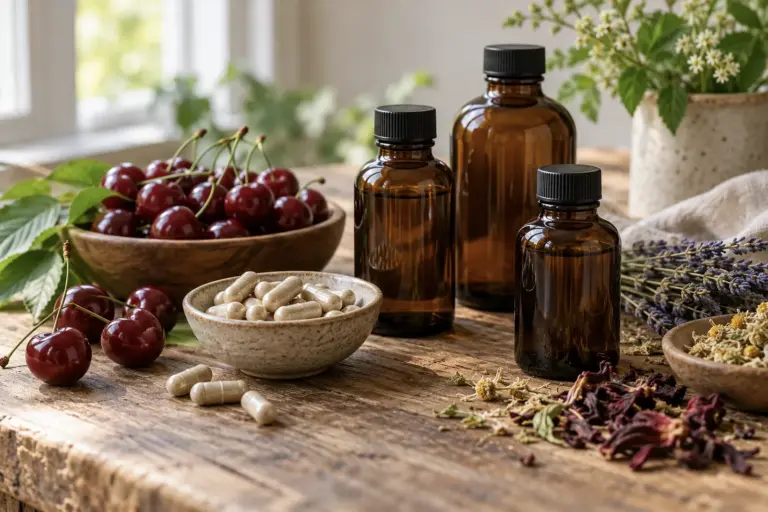

Best Tart Cherry Supplement for Gout
The best tart cherry supplement for gout is the one that gives you Montmorency tart cherry with no added sugar, in a form you will actually take every day for months. That sounds like a dodge, but it is where the evidence leaves you: the research tested cherries, juice and a few extracts rather than branded products, and the effect it found — fewer flares in some studies, a small and inconsistent change in uric acid in others — is modest enough that consistency matters more than any label claim. We have not ranked brands, for the same reason. What follows is how to choose one.
If you want the evidence itself in more detail, read tart cherry juice for gout: what the studies show. This page is the buying guide.
First, what cherry can and cannot do
A case-crossover study linked cherry intake with fewer gout attacks, particularly in people also taking allopurinol, and small trials of juice or extract have produced mixed results on serum urate. None of that makes cherry a treatment. It will not bring a high uric acid level down to the target of 6 mg/dL (360 µmol/L), it will not dissolve tophi, and it does nothing for an attack already under way. Think of it as a low-risk extra on top of proper care.
The four forms, compared
| Form | What the research used | Strengths | Watch out for |
|---|---|---|---|
| Concentrate | Tart cherry juice concentrate, diluted | Closest to the studied form; flexible dose | Added sugar or “juice drink” blends; natural sugars still count |
| Capsules / extract | Some trials used extracts | Convenient, no sugar, travels well | Cherry content rarely stated; supplements are loosely regulated |
| Frozen or dried tart cherries | Observational studies counted whole cherries | Whole food with fibre; usually cheap per serving | Dried versions are often sweetened |
| Ready-to-drink juice | Some trials | No mixing | Bulky, and the most sugar per dose |
What to check on the label
- Montmorency tart cherry named as the fruit. Sweet cherries are a different product with more sugar.
- No added sugar in concentrate or dried fruit. Fructose raises uric acid, which defeats the point — our page on fructose and gout explains the mechanism.
- For capsules, a stated cherry content — how much fruit or extract each dose represents. A label that only says “tart cherry” with no quantity tells you nothing.
- Few extra ingredients. Blends that add celery seed, turmeric and a dozen other things make it impossible to know what is doing what, and add interaction risk.
- Third-party testing, if the brand offers it. It confirms the capsule contains what it says, not that it works.
Where to buy
Supermarkets and health-food shops stock concentrate and frozen cherries. Online, compare current listings for unsweetened Montmorency tart cherry concentrate, Montmorency tart cherry capsules or unsweetened dried tart cherries, and apply the label checks above to every listing — product pages change, so check the ingredients panel rather than the headline.
Our pick by situation: if you do not mind the taste and watch your sugar, unsweetened concentrate diluted in water is the form closest to the research. If you know you will not keep up with a bottle, capsules that state their cherry content are the practical choice. Frozen tart cherries are the cheapest honest option if you can find them.
How much, and for how long
Concentrate is commonly used at about a tablespoon (30 ml) once or twice a day, diluted. For capsules, follow the label. Whole cherries in the observational data amounted to roughly half a cup a day. Give it several months before deciding, and judge it by how often you flare against a record of how often you flared before — a good fortnight proves nothing.
Who should be careful
- People with chronic kidney disease or on potassium-sparing medication: cherry juice is high in potassium.
- People managing diabetes: count the carbohydrate in concentrate or juice.
- Anyone on warfarin or other anticoagulants: mention it to your prescriber before starting any supplement.
- Everyone: a supplement is never a reason to reduce prescribed gout medication.
If your attacks are frequent, cherry is not the lever to pull first. Our practical guide to allopurinol explains the treatment that actually moves the number. A painful big toe is also not automatically gout: a first attack, or any hot joint with fever, needs a doctor the same day.
Frequently Asked Questions
Are tart cherry capsules as good as juice?
Possibly, but it is hard to know, because most capsules do not state how much cherry they contain and the studies used different preparations. Juice concentrate is closer to what was tested; capsules win on convenience and sugar.
Can I take tart cherry with allopurinol?
Generally yes, and the observational data suggest the combination may be where cherry helps most. Tell your prescriber, and keep taking the medication as directed.
Will tart cherry lower my uric acid?
Perhaps a little, inconsistently. The stronger signal is on flare frequency. Neither effect is large enough to replace treatment.
Is sweet cherry juice a substitute?
Not a good one. It carries more sugar and was not what most of the research used.
If the food side of gout is where you keep getting stuck, a supplement will not fix that. Our guide to lowering uric acid naturally sets out the changes with real leverage, and our End of Gout review looks at one structured eating plan, with its limits.
What to read next
How we reviewed this (updated 16 October 2026): this page is based on the vendor’s official information, pricing and policies. We have not hands-on tested the products listed, and we have not read their materials unless this page says so.